
The Day Trader’s Prop Reset Trap
The Prop Account Reset Trap: Are Cheap Resets Making Us Worse Traders?
What if you knew you could not reset, rebuy, or start another prop trading account tomorrow? Would you still take the trade you’re about to take?
That question has been sitting with me lately because I think it exposes one of the most interesting psychological challenges in modern prop firm trading. Prop firms have created an incredible opportunity for developing day traders. Instead of needing tens of thousands of dollars of personal capital to participate meaningfully in the futures market, traders can access evaluations and potentially funded accounts for a relatively small fee.
I’m a prop trader myself, and I’m genuinely grateful for that opportunity. But there is another side of the equation that I think we need to talk about: When trading accounts become easily replaceable, does our discipline become more replaceable too? That is what I call the Prop Account Reset Trap.
Replaceable Capital Can Change the Way We Perceive Risk
Imagine taking $10,000 that you spent years saving and transferring it into your personal brokerage account. How carefully would you trade that money?
Now compare that emotionally to purchasing a $50K prop evaluation for a relatively small fee. The screen might say $50,000, but somewhere in the back of your mind, you know that you aren't personally risking $50,000. If the evaluation fails, you can purchase another. That difference matters.
It can quietly give us permission to take one more trade. Size slightly larger. Ignore a personal daily loss limit. Take a lower-quality setup because the account is already close to drawdown. None of these decisions necessarily feels outrageously reckless in the moment. That's what makes them dangerous.
Risk erosion often happens one tiny permission at a time. And when the account becomes disposable, discipline can start becoming disposable with it.
The Reset Loop
There is almost a video-game quality to modern prop trading. You lose a life. You restart. You lose another life. You restart again.
In prop trading, that can become: Evaluation → Drawdown → Blow Account → Reset → Evaluation → Drawdown → Reset
The danger is that we can become incredibly good at restarting accounts without actually becoming better at keeping them. Those are two very different skills. Passing evaluations certainly represents progress. But ultimately, our goal shouldn't simply be getting good at hitting a profit target over a short period. The bigger skill is learning how to hold an account for weeks and months, protect its drawdown, take payouts, continue taking payouts, and eventually manage increasingly meaningful amounts of capital.
Passing an evaluation and becoming a sustainable trader are not necessarily the same skill.
Passing Fast vs. Trading Professionally
The structure of an evaluation can encourage a very particular mindset: How quickly can I hit the target? Can I pass this by Friday? What if I just size up? I only need one big NQ runner. I'm already close to drawdown anyway, so I might as well go for it.
That approach is focused on finishing the level.
Compare that with another approach: Is this actually one of my best setups? How much am I willing to risk here? Where is this trade objectively wrong? Do today's market conditions favor my edge? Does this market even deserve my capital today?
The professional trader isn't trying to finish a level. The professional trader is trying to stay in business.
Short-term evaluation success can sometimes reward aggression. Long-term trading rewards survival, consistency, appropriate sizing, patience and disciplined risk management. And ultimately, those are the skills we need to be practicing.
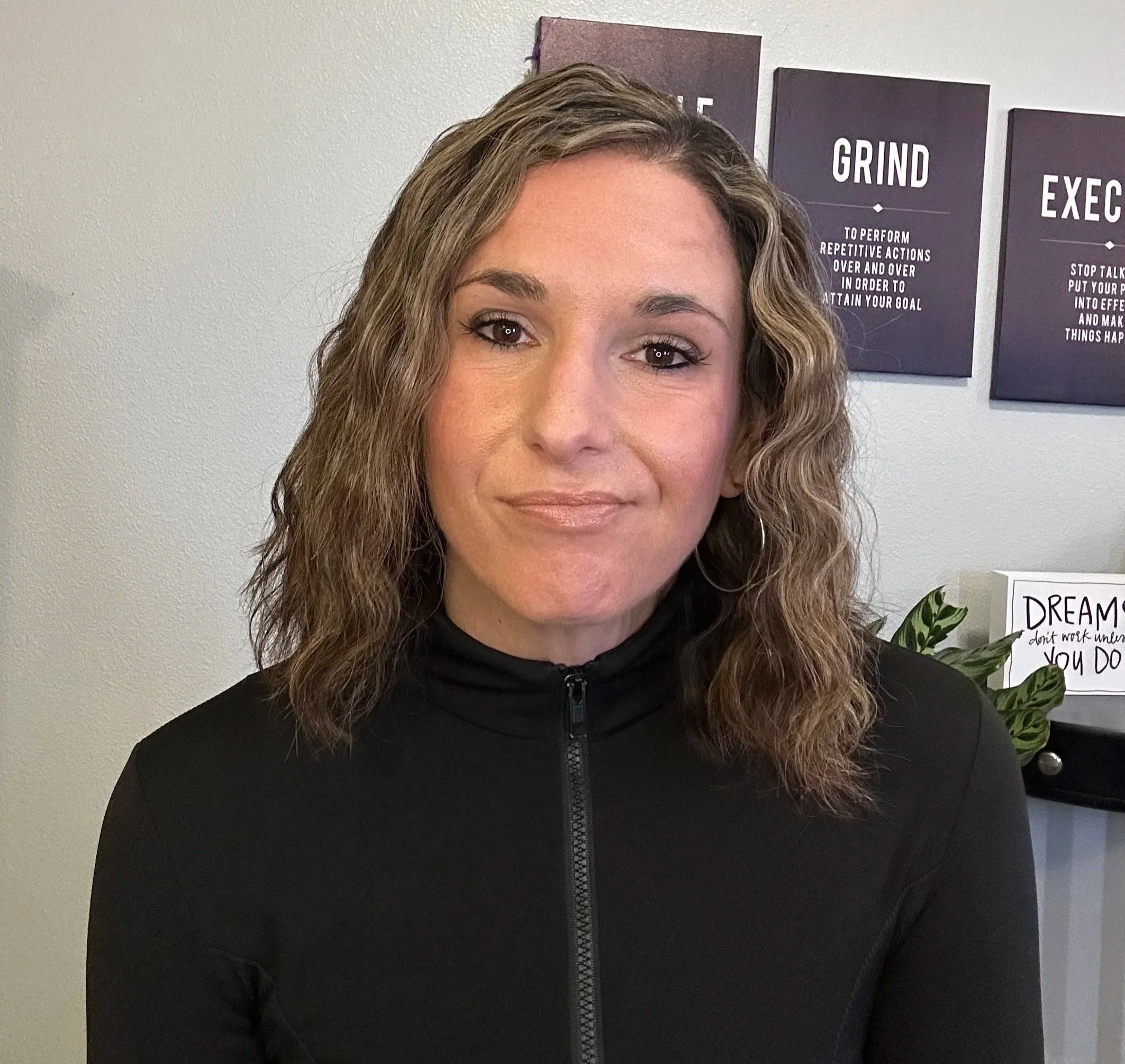
“Maybe you don’t need another account. Maybe you need to understand why you’re not protecting the ones you already have.”
~ Becky Gaskell, Market Mamas
When an Account Becomes "Basically Dead"
One of the most fascinating psychological moments happens when a prop account gets close to its maximum drawdown.
Imagine you only have $500 of drawdown remaining. Suddenly, the thinking can become: "This account is basically dead anyway." "I have one trade left." "I might as well go for it." "Either I save it or I blow it and reset."
But consider that same $500 outside of a prop account. If it were $500 from your paycheck - money that could pay for groceries, insurance, utilities or other real-life expenses - you probably wouldn't think of it as meaningless.
So why does the final $500 of drawdown suddenly deserve less discipline than the first $500? It shouldn't. The account balance should not determine the quality threshold of your setup.
If a trade isn't an A-quality opportunity when the account is fresh, it shouldn't magically become acceptable because the account is near its drawdown limit. Your position size may need to change as available drawdown changes. Your standards should not.
You Are Training the Trader Who Will Eventually Trade Bigger Capital
This is where the Prop Account Reset Trap becomes much bigger than the cost of an evaluation.
Every trade is reinforcing behavior. If you allow yourself to revenge trade during evaluations, you're practicing revenge trading. If you over-leverage because you want to pass faster, you're practicing over-leveraging. If you overtrade because the account is replaceable, you're practicing overtrading.
Passing the evaluation doesn't magically erase those behaviors. You bring them with you.
The same impatience that repeatedly destroys evaluations can eventually destroy funded accounts. And the same loose risk management can follow you into live accounts or your own personal capital later. That's why I think we need to stop asking only: "Should I reset this account?"
And start asking: "What trading behaviors am I repeatedly training into myself?"
Because ideally, we're moving forward. We're passing evaluations, reaching funded accounts, taking payouts and eventually managing larger amounts of capital. We should be developing the behaviors today that we want to bring with us when we get there.
What If This Were Your Only Account for the Month?
One practical psychological exercise I've started thinking about is simple: Pretend this is the only prop account you're allowed to have for the next 30 days. No resets. No backup evaluation. No shiny new account tomorrow morning. This is it.
Now look at the trade you're considering and ask:
Is this actually one of my best setups?
Is the risk appropriate?
Would I take this trade with my own money?
Would I use this position size with my personal capital?
Would I still take this trade if I couldn't replace this account?
If your answer changes when you remove the possibility of a reset, that tells you something important about the original trade. That little mental exercise can create friction between seeing a possible trade and actually putting capital behind it. And sometimes, as traders, we need that friction.
Make Blowing an Account Behaviorally Expensive
This doesn't mean we need to make trading more financially painful. It means we can make account failure behaviorally meaningful. If you blow an evaluation, don't immediately click "reset."
Maybe you have a personal rule that says there are no more accounts that day. Maybe you wait 24 or 48 hours. And during that time, you review exactly what happened. Screenshot the trades. Review your entries. Look at your sizing. Identify where you broke your rules. Pay attention to whether revenge trading, impatience, overtrading or desperation entered the session.
Ask yourself: What actually killed this account?
This isn't about shame. Because F shame. That is no way to grow and expand into new horizons and levels. Rather, it's about extracting the lesson. If we immediately replace every account without examining what happened, we risk repeatedly funding the exact same psychological problem.
The Goal Isn't to Become Great at Resetting Accounts
Prop firms aren't inherently the problem. The opportunity they provide traders is massive, and I remain incredibly grateful that this model allows traders to participate in markets without necessarily putting significant family savings or personal capital at risk.
The challenge is learning to take advantage of that opportunity without allowing easy access to capital to weaken our respect for risk. We need to treat that capital as a valuable resource.
Because ultimately, we are training something far more valuable than any individual evaluation: We're training the trader we are becoming. The habits you're building in your current evaluation can follow you into your funded account. They can follow you into a live account. And eventually, they can follow you into managing your own meaningful personal capital.
So the next time you find yourself saying: "Whatever. I'll just reset."
Pause.
Ask whether you're simply resetting an account, or avoiding a lesson that could make the next account last longer. Maybe the trader who constantly needs more accounts doesn't actually need another account. Maybe we need to understand why we're not protecting the ones we already have.
Our goal isn't to become incredible at resetting. Our goal is to become incredible at staying in the game. To protect capital. To manage risk. To build accounts. To take payouts. And to become the kind of steady, sustainable trader who can keep doing this for years to come.
Because the habits we practice on today's account are building the trader who will manage tomorrow's capital. And that trader is worth protecting.
Market Mamas is a trader psychology podcast focused on the real mental and emotional work behind becoming a consistent day trader. Follow along for conversations about futures trading psychology, discipline, risk management, prop firm trading, emotional control and the habits required for long-term trading success.
To those who show up for these conversations with me, the mental effort and time dedication, you are my people and I would love to get to know you better! Please take a moment to shoot me a comment on https://www.market-mamas.com/contact! Keep learning, keep growing, keep trusting yourself, and always show yourself some love throughout this pursuit. We got this!