
What does it actually take to stay in the trading world for decades? Not just survive it, but grow with it?
In this episode of Market Mamas overviewed here for my readers, I sat down with Michael Serpico, a trader whose journey started as a young man on the physical floor of the New York Mercantile Exchange and evolved through the 2008 financial crisis, institutional market structure, automation experiments, and eventually into building his own trading lifestyle platform. This wasn’t a conversation about hot picks or overnight wins. It was about pressure. Maturity. Identity. And what really separates traders who last from those who burn out.
The End of one Era, and the Beginning of His
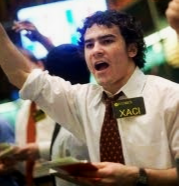
At just 19 years old, Michael landed an internship at the New York Mercantile Exchange during the final real chapter of open outcry trading. This was the era of traders yelling across pits, hand-written trade tickets, clerks running orders, and the kind of physical, competitive energy you only see in old trading floor movies. He wasn’t risking his own capital yet. He was observing.
And that vantage point gave him something most modern traders never get: a visceral understanding of how markets function at a human level. Before algorithms. Before commission-free apps. Before trading from your couch. He saw that markets are emotion. Ego. Urgency. Competition. Stress. He saw how personalities shaped outcomes. Many of the dominant figures were former athletes wired for adrenaline and competition. It was intense, fast, and unapologetically aggressive. But because he didn’t yet have money on the line, he gained exposure without devastation. That perspective would serve him later. Goodness, what a cool introduction to the markets!
The Inevitable Tuition Phase
Like most traders, his early retail journey came with losses. In the mid-2000s, before crypto exploded, retail forex was the accessible frontier. High leverage. Low barrier to entry. Big opportunity, and big risk. Naturally, he blew up his first account.
Then came the familiar cycle most traders quietly experience: lose money, claw some back, think you’ve figured it out, lose again, and finally realize you need to actually learn how this works. What’s interesting is that Michael didn’t start with single stocks the way many retail traders do. His foundation was macro: commodities, currencies, interest rates, energy. That early exposure shaped how he still views markets today. Even when he uses ETFs, his thinking tends to revolve around broader flows rather than chasing individual earnings reports.
Watching 2008 From the Inside
After earning his finance degree, Michael joined a proprietary options market-making firm. Fourteen months later, the 2008 financial crisis hit and the firm shut down. He watched seasoned traders endure volatility that most retail traders have never experienced. Millions evaporating. Total uncertainty. No roadmap. It didn’t take long until he lost his job in that chaos. But he didn’t lose his capital.
Looking back, he describes it as an incredible education. He got to see what systemic stress actually looks like without being financially destroyed by it. That kind of early exposure permanently recalibrates your understanding of risk. It’s one thing to read about financial crises. It’s another to sit next to people living through one. What a vantage point!
“When you need the trade to work, you’re going to force it.”
~ Michael Serpico, Trader Dad
Learning the “Plumbing” of Markets
Instead of immediately jumping back into running his own book, Michael spent the next decade working adjacent to institutional desks. He saw how repo markets functioned, how corporate bonds traded, how foreign exchange infrastructure operated, and how execution mechanics actually worked behind the curtain. By day, he was immersed in the plumbing of markets. By night, he was coding.
He built backtests in Python, connected to broker APIs, experimented with automated systems, analyzed Sharpe ratios, and tested stop-loss variations. He calls it his “model train set.” It wasn’t about building a perfect money machine. It was about understanding how everything fit together.
Some systems worked on paper. Some didn’t. None became a live, fully automated solution he deployed at scale. But every experiment deepened his understanding. And that’s a powerful reminder: even when something doesn’t make money, it can still make you sharper.
The Pressure of Quitting Your Job
One of the most important parts of our conversation was about the moment so many traders fantasize about: quitting your day job. Michael tried trading on pure commission at one point, with no salary cushion. The psychological pressure was intense. When your mortgage depends on today’s trade, you don’t think clearly. You start forcing setups. You rationalize entries. You revenge trade. You widen stops you promised yourself you wouldn’t touch. And the irony? The more you need the trade to work, the worse your execution becomes. And, if you’re a trader who has been to this level, then you know what we mean!
He shared a concept I absolutely loved: trading profits are “sprinkles.” They’re wonderful. They fund trips. They feel amazing. But they aren’t required for survival. When your core expenses are covered elsewhere, whether through another income stream or diversified investments, your decision-making becomes calmer and more objective. Many long-term successful traders maintain multiple income streams for exactly this reason. Psychological freedom improves performance. It’s something every developing trader needs to think deeply about before making the leap.
Strategy Is Not Enough
Most traders believe finding the right strategy is the answer. Michael pushed back on that. The real question is whether the strategy fits your personality. If you’re not a morning person, trading the open may be torture. If you don’t want to stare at charts all day, intraday scalping probably isn’t your lane. If you’re prone to anxiety, defined risk structures might serve you better than open-ended trades.
For him, that realization meant stepping away from high-intensity intraday trading and focusing on defined-risk swing trades. He knows the possible outcomes in advance. He doesn’t need to monitor every tick. That alignment between personality and strategy is what created sustainability. And I couldn’t agree more. When I stopped trying to trade like someone else and refined a system that actually fit my brain and schedule, everything changed for me too.
Markets as a Window Into the World
One insight I loved was how Michael uses markets as his newsfeed. Instead of scrolling headlines, he watches treasury yields, natural gas pricing, currency shifts. A winter storm? You’ll see it in natural gas. Global stress? Watch bonds. Liquidity crunch? Spreads widen. Markets become shorthand for what’s happening in the world.
That intellectual puzzle, interpreting flows and signals, is part of what has kept him engaged for so long. It’s less about gambling and more about understanding global dynamics.
Trader Dads: A Lifestyle, Not a Signal Service
Eventually, Michael channeled his experience into Trader Dads: a Substack, podcast, and lifestyle platform centered on markets, education, and dad life.
It’s not a stock-picking subscription. It’s more like the conversation that happens after the closing bell when traders decompress and talk about what really matters. He publishes a weekly op-ed, hosts a monthly podcast, and runs a merchandise shop that donates $1 from every sale to St. Jude Children's Research Hospital and the disaster relief fund associated with Cantor Fitzgerald.
This conversation was a reminder that longevity in trading isn’t built on flashy wins or viral gains. It’s built on risk management, psychological alignment, continuous learning, and not needing any one trade to work.
🔗 Connect with the Trader Dad:
👉 Substack - https://substack.com/@traderdads
👉 Instagram: https://www.instagram.com/traderdads/
👉 YouTube - https://www.youtube.com/channel/UC0s9XEdFSfSfV_n49fWvvAQ
👉 Etsy Shop: https://www.etsy.com/shop/traderdads/
If you find value in these conversations with other awesome traders, please do like and subscribe to the podcast on whatever platform you caught this conversation on and let’s evolve together into the highest profitability!! And if you are considering being a guest on my podcast as well, reach out and let’s talk!! https://www.market-mamas.com/contact Take care! 💛📈