
Veteran Trader: Scott Pulcini
From Millions to Starting Over: Veteran Trader Scott Pulcini on Risk, Resilience & Finding a Real Trading Edge
What does it actually take to survive as a trader for decades? Not just to have one profitable month, pass an evaluation, or find a strategy that works in the current market. But to stay in the game as markets evolve, technology changes, edges disappear, and your own psychology gets tested?
In this episode of the Market Mamas Trader Psychology Podcast, I sat down with veteran trader Scott Pulcini, whose trading career offers an incredible look at both the possibilities and the brutal realities of professional trading. Scott began his career on the floor of the Chicago Board of Trade before transitioning into electronic futures trading. His early experience was anything but an overnight success story. He nearly lost his job on his first day and went approximately two months without a single winning trading day. Then something clicked.
After spending countless hours studying market behavior, including trading the German DAX overnight before returning to trade the U.S. session, Scott began developing an edge. In 2002, he says he earned $2.8 million and became the top trader at his firm. The following year, he made $10 million.
But one of the most important lessons from our conversation is that success in trading does not guarantee permanent success. Markets change. Edges change. And traders have to change with them.
Your Trading Edge Will Not Necessarily Last Forever
As electronic markets evolved and algorithms became increasingly dominant, the style of trading that had made Scott millions stopped working the way it once had. That experience reinforced one of his biggest lessons from decades in the markets: Traders have to evolve.
An edge isn't something we necessarily discover once and use forever. Market structure changes. Technology changes. Participants change. The behavior that once created opportunity can disappear. Scott eventually stepped away from trading entirely, entered medical sales to support his family, and spent years outside the business before discovering a new way of viewing the markets that made sense to him again. His comeback wasn't built around trying to recreate his former success. It required becoming a different trader.
The Risk-Management Lesson That Cost $1.5 Million
Perhaps the most powerful part of our conversation had nothing to do with entries, indicators or market structure. It was about daily loss limits.
During the height of Scott's success, his trading firm's daily loss limit had grown to $100,000. But after years of profitability, those limits became increasingly flexible. That flexibility became dangerous.
Scott shared that on one trading day he continued trading after reaching his loss limit and ultimately lost approximately $800,000. Only about a month later, he did it again and lost another $700,000. Two days. Roughly $1.5 million. The dollar amount is extreme, but the psychological lesson applies to traders at every account size.
Once we're emotionally activated, frustrated and determined to get our money back, the trader making decisions may no longer be the calm trader who created the risk plan that morning. That is why Scott strongly advocates having a hard daily loss limit that removes the decision from the trader altogether.
Whether your maximum daily loss is $100, $1,000 or $100,000, the principle is the same: There will always be another trading day. Protect your ability to participate in it.
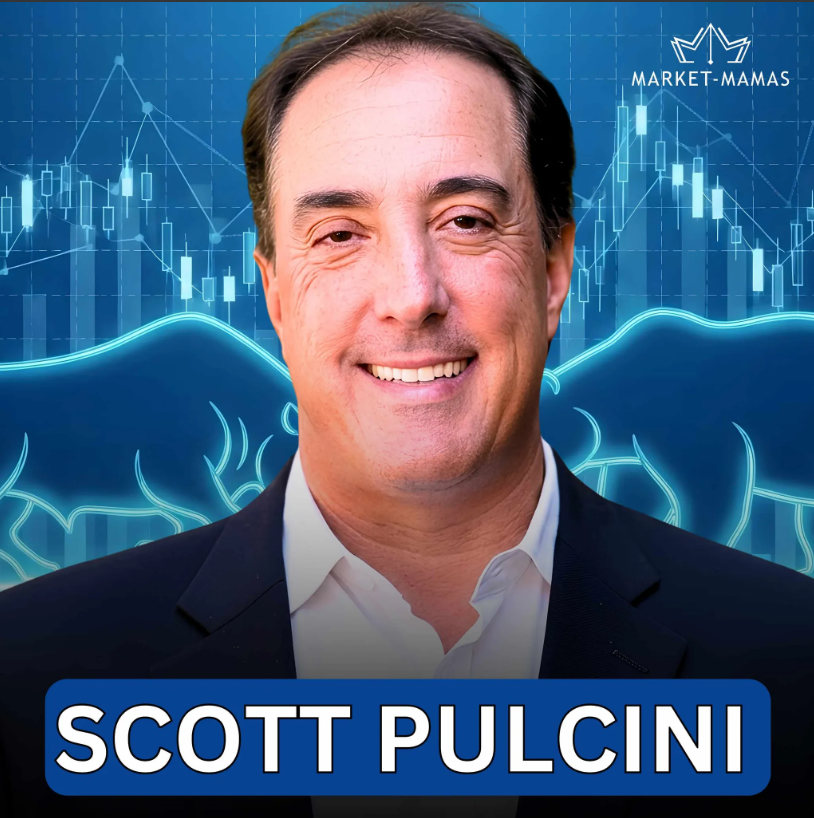
“If it’s a day that things aren’t working, you hit your loss limit, you’re done.”
~ Scott Pulcini, Veteran Trader
Trading Requires Resilience, But Also Humility
Scott's story is also an important reminder that resilience doesn't mean stubbornly continuing to do the same thing. Sometimes resilience means adapting. Sometimes it means reducing size. Sometimes it means admitting your current edge isn't working. And sometimes it means stepping away entirely and rebuilding.
Scott went from trading enormous size and generating millions in profits to leaving the industry and working in medical sales. Years later, he returned to futures trading at dramatically smaller size and began rebuilding his career. That kind of experience requires something trading constantly demands from us: humility. Which is honestly such a powerful and key trait in the most successful among us.
The market does not care what you made last year, how experienced you are, or how strongly you believe the next trade should work. Longevity requires being willing to learn again.
Stop Making Trading More Complicated Than It Needs to Be
Another message Scott emphasized throughout our conversation was simplicity. Interestingly, during some of his most profitable years, he wasn't trading from complicated chart setups filled with indicators. He was primarily reading the depth of market and order book. His experience has led him to believe that traders often hurt themselves by consuming too much information.
More indicators don't automatically create more conviction. Sometimes they create conflicting signals, hesitation and overanalysis. The goal isn't to know everything happening in the market. The goal is to develop a repeatable edge you understand deeply enough to execute consistently.
Looking Beneath the Candles: Liquidity, Volume and Order Flow
Scott also walked us through the order-flow methodology he uses today, including Bookmap, CME Market by Order (MBO) data, resting liquidity, stop orders, iceberg orders, volume events and options-related market levels. His broader point was especially valuable. Candlesticks show us the result of market activity. Orders and volume are part of what create those candles.
Scott uses order-flow information to identify meaningful activity around areas he already considers important, looking for confirmation that significant market participants are active there. Rather than trying to predict exactly what every large participant is doing, his focus is on recognizing meaningful concentrations of activity and then allowing price behavior to confirm whether an opportunity exists.
For traders who primarily use price action, support and resistance, Fibonacci levels or other technical structures, the takeaway isn't necessarily that you need to abandon your system. It's that understanding why price may be reacting at a level can add another layer of context to your trading decisions.
Find an Edge. Test It. Then Follow the Rules.
Scott's closing advice may have been the most important message of the entire episode: Stop jumping from strategy to strategy.
Developing traders often believe the next indicator, mentor, setup or strategy will finally solve the problem. But constantly changing systems makes it almost impossible to determine whether you ever had an edge in the first place.
Scott's advice is to find something with measurable potential, test it through backtesting or replay, develop specific rules around it. And then actually follow those rules.
That last part is where trading psychology takes over. You can have a legitimate setup and still lose money if you selectively take signals, abandon trades because you're afraid, increase risk emotionally, revenge trade losses or ignore your daily loss limit. A trading edge only matters if the trader can execute it consistently.
Profitable Trading Doesn't Mean Making Money Every Day
One final idea from Scott deserves attention because it challenges an expectation many developing traders carry into the market: You are not supposed to make money every day.
Scott described profitable trading as something that can look much more like a market chart itself: small wins, small losses, periods of relatively flat performance, and then several significant winning days that contribute disproportionately to the year's profitability.
Trying to force a specific dollar amount from the market every single day can create unnecessary trades and unnecessary risk. Your job is not to make the market pay you today. Your job is to execute your edge, control your downside and remain available when the outsized opportunities eventually arrive.
The Real Goal Is Staying in the Game
After decades of trading, millions made, millions lost, a career interruption and an eventual return to the markets, Scott's story offers a perspective that newer traders rarely get to hear. Long-term trading success isn't built on never struggling. It's built on learning how to survive the struggle without destroying yourself or your trading capital.
Protect your downside. Respect your daily loss limit. Expect markets to change. Keep your trading simple. Find an edge you can actually validate. Follow your rules even when your emotions tell you not to. And above all, remember that there will always be another trading day.
Because the longer you stay in this game, the more opportunities you give yourself to become the trader you're trying to become.
Listen to the full Market Mamas Trader Psychology Podcast conversation with Scott Pulcini (linked above) for his complete trading journey, real-time market examples, order-flow insights, and decades of lessons on risk management, resilience and professional trading.
🔗 Connect with Guest, Scott Pulcini:
👉 LinkedIn: https://www.linkedin.com/in/scott-pulcini-056a45a/
🔗 Scott’s Resources Mentioned:
👉 Website: https://www.scottpulcinitrader.com/
👉 Flipbook: https://online.flippingbook.com/view/987859585/
If you find value in these conversations, please do like and subscribe to the podcast on whatever platform you caught this episode on. And if you are considering being a guest on my podcast as well, reach out and let’s talk!! https://www.market-mamas.com/contact Take care! 💛📈