
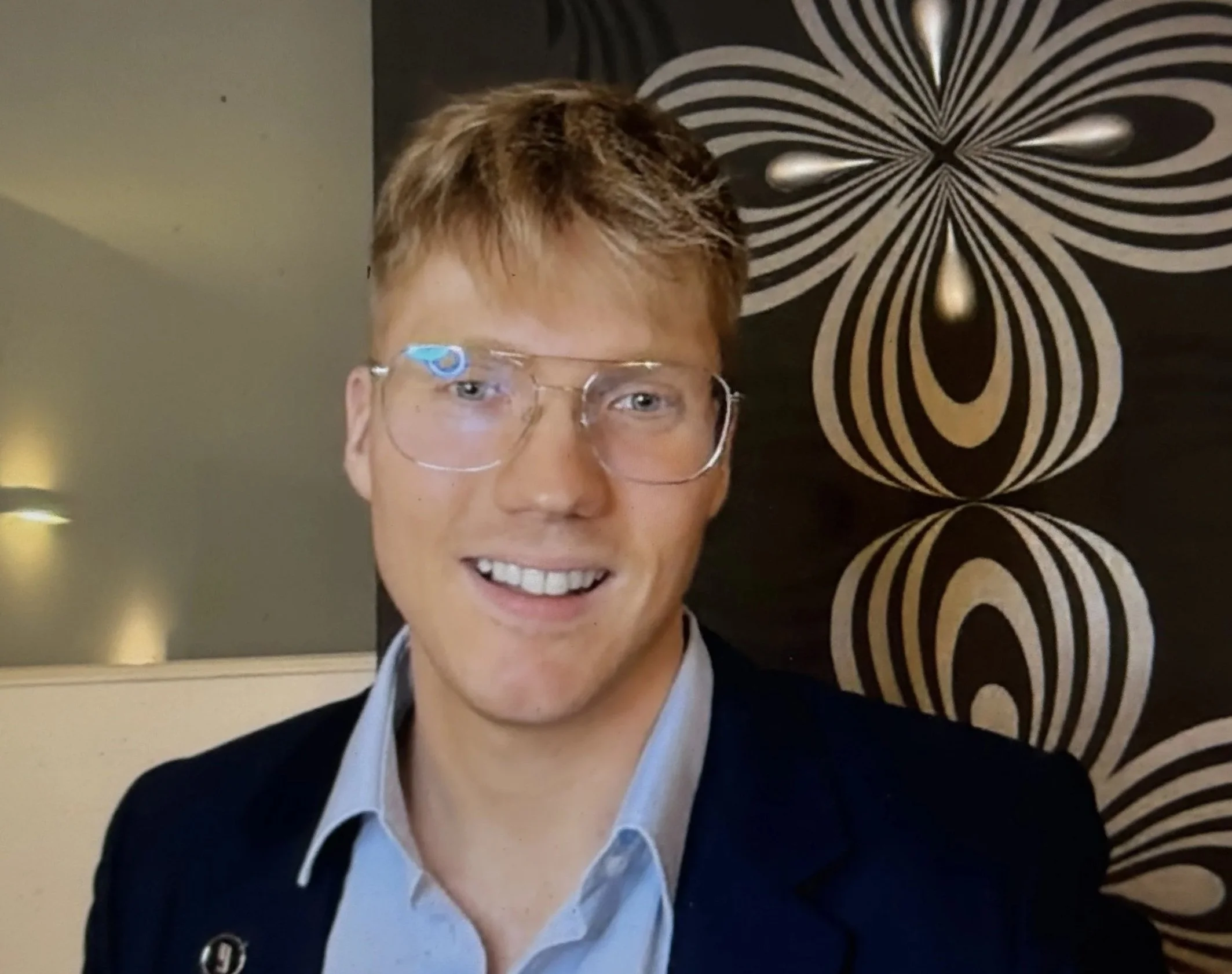
Crypto Trader & Entrepreneur: Simon Mach
Trading Psychology in Crypto: Why Discipline Beats Strategy Every Time
If you've ever found yourself searching for the "perfect trading strategy," constantly checking your charts, or wondering why consistency seems just out of reach, you're not alone.
In this episode of Market Mamas, I sat down with Simon Mach, founder of My Crypto Paradise, to discuss something every trader - whether you trade crypto, futures, stocks, or forex - must eventually learn: Success isn't determined by your strategy. It's determined by your psychology.
Although Simon built his career in cryptocurrency markets, the lessons from this conversation apply to every active trader. From overcoming uncertainty to building discipline, we explored what separates consistently profitable traders from everyone else.
The Market Never Sleeps… and Neither Can Your Emotions
One of the biggest differences between cryptocurrency and traditional markets is simple: Crypto trades 24 hours a day, seven days a week. While futures and stock traders eventually receive a natural break from the markets, crypto traders must intentionally create boundaries.
According to Simon, that's often where many traders struggle. Having access to the market every minute of every day creates constant temptation to check prices, enter impulsive trades, or react emotionally to every movement. The challenge isn't simply learning a strategy. It's learning when not to trade. Creating defined trading windows, routines, and personal structure becomes essential for long-term success.
Trading Tuition Is Expensive, Unless You Learn Early
Simon began trading cryptocurrency as a teenager after his father opened an account for him. Like nearly every successful trader, his first lessons came through losses.
Fortunately, those early losses were small. Rather than viewing them as failures, Simon considers them tuition. Many traders pay this tuition much later, with much larger accounts.
The lesson? Start small. Develop your process before increasing size. Experience is one of the few things in trading that simply cannot be rushed.
Psychology Is More Important Than Strategy
One of the biggest turning points in Simon's career came after reading Trading in the Zone by Mark Douglas. His realization was simple: A profitable strategy means very little if you cannot consistently execute it.
Many traders spend years searching for better indicators, new setups, or different systems. In reality, most already have enough of an edge to become profitable. The real obstacle is execution.
The market has a unique way of exposing our deepest emotional weaknesses:
Fear
Greed
Impatience
Ego
Overconfidence
Revenge trading
Until those behaviors are addressed, no strategy can consistently overcome them. As Simon explained: The market doesn't create your weaknesses, it simply exposes them.
Learning to Live With Uncertainty
Perhaps the most fascinating discussion centered around uncertainty.
Humans naturally dislike uncertainty. Simon shared a brilliant comparison using Uber. Traditional taxi services left customers wondering when their ride would arrive. Uber reduced that anxiety simply by showing the car moving toward you on a map. The uncertainty disappeared.
Trading is the opposite. Every trade begins with uncertainty. No trader knows what will happen next. Learning to become comfortable with uncertainty is one of the defining characteristics of consistently profitable traders. Those who cannot tolerate uncertainty often begin searching for certainty where none exists. That's where strategy hopping begins.
Stop Treating Trading Strategies Like One-Night Stands
One of Simon's best analogies may also be one of the simplest. Many traders treat trading strategies like one-night stands. A strategy works for a few trades. Then it experiences a normal drawdown. Instead of trusting the probabilities, traders abandon it and start searching for something new. Months, or years, can disappear repeating this cycle.
Instead, Simon recommends treating your strategy like a marriage. Commit to it. Understand its strengths. Accept its weaknesses. Trust the probabilities over hundreds of trades, not three. Consistency comes from repetition, not constant reinvention.
"Treat your trading strategy like a marriage, not a one-night stand."
~ Simon Mach, My Crypto Paradise
The Dopamine Trap
Trading can easily become entertainment instead of business. Winning trades create dopamine. Big wins create even more. Unfortunately, that chemical reward can become addictive.
The excitement of turning one winning trade into another often pushes traders toward:
Overtrading
Oversizing
Revenge trading
Gambling behavior
Simon explained that the market simply reflects how you approach it. Treat it like a casino... You'll likely receive gambling results.
Treat it like a business... You'll begin producing business outcomes. Professional traders aren't chasing excitement. They're following a repeatable process. And this is certainly a lesson all traders grow through, myself included.
Delayed Gratification Is a Trader's Superpower
One of the most valuable concepts discussed was delayed gratification. Most people want immediate rewards. Professional traders understand that small, consistent decisions compound over time. Instead of chasing one life-changing trade, they focus on protecting capital and allowing probabilities to work.
Trading isn't about becoming rich tomorrow. It's about becoming consistently profitable over years. The traders who master patience often outperform those constantly searching for excitement.
Protect Your Money Before You Chase More of It
A mindset shift every trader should make: Stop asking... "How much can I make?"
Start asking... "How much can I protect?"
Capital preservation creates longevity. Longevity creates opportunity. Opportunity eventually creates profits. The process always comes before the outcome. You guys, this guest Simon, we was wise beyond his years with all these key points related to trading psychology. The longer our conversation progressed, the deeper my respect and appreciation for all he’s learned grew.
Your Best Trade Has Nothing to Do With Your Last Trade
Yet another powerful takeaway involved emotional neutrality. Most traders unknowingly carry previous trades into the next decision. Three losses? Confidence drops. Three wins? Confidence skyrockets. Neither state is helpful.
Simon recommends evaluating every setup independently. Ask yourself: "If I saw this exact setup one thousand times, would I take it?"
That simple question immediately shifts attention away from emotion and back toward probability. Every trade deserves its own evaluation.
Build Discipline Outside the Charts
One of my favorite parts of the conversation was hearing how Simon improved his trading. It was not by spending more hours watching charts, but by improving his daily life.
His routine includes:
Morning structure
Evening routines
Meditation
Cold exposure
Intentional focus
Time blocking
These habits strengthened his ability to remain disciplined during trading. And I couldn't agree more. One of my favorite sayings is: How you do one thing is how you do everything. Trading rarely becomes disciplined if the rest of life is chaotic.
Know Your Edge, and Trade It Aggressively
Simon also highlighted an advanced concept discussed in Thinking in Bets by Annie Duke, one of both of our favorite books. Check out my Market Mamas episode on that killer book here: https://youtu.be/PkIjCV9TL8c?si=_rZVLXWkbdf5zhHL. Not every trade deserves the same conviction.
Professional traders understand there are actually three positions: buy, sell, or do nothing. Doing nothing is often the hardest decision. Waiting patiently for exceptional opportunities allows traders to become aggressive only when probabilities strongly favor them.
As Simon explained, many traders generate the majority of their annual profits from only a small percentage of their trades. That requires patience. It also requires confidence in your edge.
Trading Is a Long Game
Whether you're trading cryptocurrency, futures, forex, or stocks, the principles remain remarkably similar. Long-term success doesn't belong to the trader with the fanciest indicators.
It belongs to the trader who:
Builds repeatable routines
Accepts uncertainty
Trusts probabilities
Protects capital
Controls emotions
Commits to continuous improvement
The market rewards consistency, not excitement.
Final Thoughts
This conversation served as an excellent reminder that profitable trading is ultimately an inside job. Technical analysis matters. Risk management matters. But neither can overcome an undisciplined mindset.
If you're currently searching for the next perfect strategy, perhaps the next breakthrough isn't another indicator. Perhaps it's becoming the kind of trader who can consistently execute the strategy you already have. That's where lasting success begins.
Watch the complete conversation with Simon Mack of My Crypto Paradise on the Market Mamas podcast linked above to hear more insights on crypto trading psychology, emotional discipline, risk management, and developing a professional trader's mindset. If you're serious about becoming a consistently profitable trader, this is one episode you won't want to miss.
🔗 Connect with Guest Simon Mach:
👉 LinkedIn: https://www.linkedin.com/in/simon-mach-38299033a/
👉 Website: https://mycryptoparadise.com/
👉 YouTube: www.youtube.com/@MyCryptoParadise
If you find value in my conversations with other awesome traders, please do like and subscribe to the podcast on whatever platform you caught this episode on and let’s evolve together into the highest profitability!! And if you are considering being a guest on my podcast we well, reach out and let’s talk!! https://www.market-mamas.com/contact As always, happy trading and keep showing up for the work. Let’s go!💛📈