
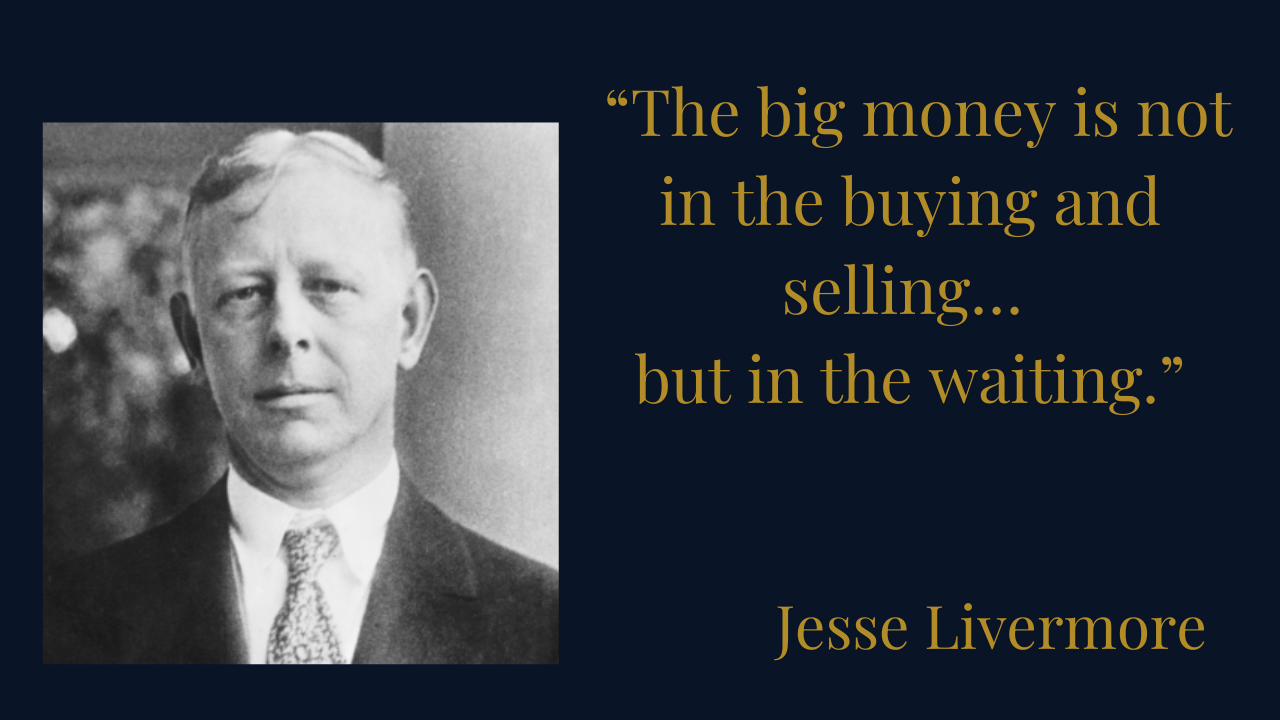
Jesse Livermore
In 2025, I started a segment within Market Mamas of episodes geared at Learning from Legends! There are so many great traders that have made a name and reputation for themselves for all kinds of reasons. For this fourth installment of Learning from Legends on the Market Mamas Trader Psychology Podcast, we dive into the life, strategies, and legacy of one of the most influential traders in history: Jesse Livermore.
Livermore’s story is not just one of legendary profits and market mastery, it’s also a deeply human story of discipline earned the hard way, emotional struggle, resilience, and the psychological toll that trading can take. His life remains one of the most important case studies for modern traders who want longevity, not just big wins. This episode explores both sides of the Livermore legacy: the brilliance and the cautionary lessons, and why his wisdom still matters in today’s markets.
From Farm Boy to Wall Street Phenomenon
Born in 1877 in Shrewsbury, Massachusetts, Jesse Livermore grew up on a modest farm and showed an early, almost uncanny talent for numbers and patterns. At just 14 years old, he ran away from home to Boston and took a job as a quotation board runner, manually writing stock prices as ticker tape printed them. That job became his real education.
By watching prices move day after day, Livermore noticed something most people missed: markets move based on human psychology, not randomness. Fear, greed, hesitation, and momentum repeated themselves in patterns.
By his mid-teens, he was recording prices, testing theories, and trading in bucket shops, eventually turning $5 into $1,000 and earning the nickname “The Boy Plunger.” But his early success did not translate cleanly to Wall Street, where listening to tips, rumors, and groupthink nearly wiped him out multiple times. Those early failures became the foundation of his discipline.
The Core Trading Principles Jesse Livermore Lived (and Learned)
Through painful losses and extraordinary wins, Livermore refined a set of principles that still form the backbone of modern trading:
1. Trade With the Market, Not Against It
Livermore learned that predicting the market is far less effective than reacting to it. Trends exist for a reason and fighting them is a fast way to lose capital.
2. Cut Losses Quickly
Small losses are survivable. Big ones are not. Livermore adopted strict stop-loss rules after early drawdowns nearly destroyed him.
3. Let Profits Run
His greatest fortunes came not from frequent trading, but from patience. Winners were allowed to grow while risk stayed controlled.
4. Trade Only When Conditions Are Right
Boredom trades, emotional trades, and forced setups were costly mistakes early in his career. Waiting for A+ setups became one of his greatest edges.
5. Position Sizing & Pyramiding
Livermore scaled into winning trades as the market confirmed his thesis, building positions gradually rather than betting everything at once.
6. Ignore Tips and Insider Noise
Some of his worst losses came from listening to others. His best trades came from trusting price action and confirmation.
7. Psychological Discipline Above All
Fear, greed, impatience, and overconfidence were the true enemies. Journaling, self-awareness, and emotional control became essential to survival.
As Livermore famously said: “Being right too early is the same as being wrong.”
The Biggest Win: The 1929 Market Crash
Livermore’s most famous trade came during the 1929 stock market crash. While the public remained euphoric, he noticed excessive leverage, speculation, and cracks beneath the surface. He patiently built short positions before the peak.
When panic hit, he stayed disciplined - cutting losses quickly and letting winning positions expand. The result? Over $100 million in today’s dollars, earned through trend-following, patience, and emotional control. This trade cemented his reputation as “The Great Bear of Wall Street.”
The Biggest Loss: When Rules Were Broken
Livermore’s story is not a straight line upward. After massive success, he reinvested heavily during the market recovery of the early 1930s — but this time with overconfidence, excessive leverage, and weakened risk management. Market reversals and margin calls wiped out nearly everything he had built.
Even the trader who taught the world about discipline was still human. His biggest win followed his rules. His biggest loss ignored them. That contrast is why his story remains so powerful today.
A Tragic Ending and an Enduring Lesson
Despite his legendary status, Livermore’s personal life was marked by instability, emotional strain, and loneliness. In 1940, at age 63, he died by suicide. His death is a sobering reminder that trading success is not just about money. Emotional resilience, balance, and mental health matter just as much as strategy.
Livermore’s life stands as both a blueprint for market mastery AND a cautionary tale about unchecked pressure and imbalance.
Why Jesse Livermore Still Matters Today
Jesse Livermore is remembered not because he was always right, but because he understood the market as a reflection of human behavior long before that idea was mainstream.
His legacy lives on because:
His principles still define modern trading
His failures make him relatable
His comebacks make him aspirational
His story reminds us that psychology is everything
As he warned: “The game of speculation is the most fascinating game in the world, but it is not a game for the timid or emotionally unprepared.”
And that’s a wrap for my deep dive into the life of Legendary Trader Jesse Livermore. I love trading and am completely dedicated to continual pursuit in this business. And I’m pretty into the opportunity hosting this podcast provides me as well. I believe we can help each other out and all pursue greatness together. There is tremendous power in a supportive community and I am so grateful to anyone who has read to the end of this episode blog and is still here and hence is allowing me the privilege of contributing to your trading support system. Please send me a comment (https://www.market-mamas.com/contact) if you are into this podcast series idea and have legendary traders that you would like to hear me cover in future episodes. Happy trading and take care of yourself along the way 💛