
Richard Dennis & the Turtle Traders: Can Great Traders Be Taught?
Are great traders born with some natural gift, or can trading success actually be taught?
Legendary commodities trader Richard Dennis had a pretty strong opinion about that question. And rather than just debating it, he decided to put his own money behind an experiment. The result? One of the most fascinating stories in trading history: the Turtle Traders.
But what I find most interesting about this story isn't how much money they made. It's what the experiment revealed about trading psychology, discipline, and the difference between knowing what to do and actually doing it.
From $400 to Millions: Who Was Richard Dennis?
Richard Dennis started working on the Chicago trading floor in 1966, at just 17 years old. By 1970, he was trading for himself with approximately $400 in starting capital. Within just a few years, he had made a fortune trading commodities, particularly soybean futures, and earned the nickname Prince of the Pit. Pretty remarkable, right?
But Dennis wasn't simply guessing which direction the market would move. He became known for a systematic, trend-following approach that emphasized controlling losses and allowing winning trades room to develop. And here's something I think modern futures traders can appreciate: You don't have to be right all the time to be a successful trader.
Sometimes the real challenge isn't finding a good entry. It's managing your risk, accepting the losing trades, and having the patience to let a winner actually win.
The Turtle Traders Experiment
In the early 1980s, Dennis and fellow trader William Eckhardt disagreed about whether successful trading was an innate talent or a learnable skill. Dennis believed he could teach people to trade successfully. So he recruited individuals from different backgrounds, trained them in a rules-based trading methodology, and gave them real capital to trade.
And the experiment worked. Several Turtle Traders went on to achieve extraordinary success. But here's where the psychology gets interesting. They didn't all achieve the same results. Same general training. Same methodology. Same rules. Different outcomes.
Why? Because understanding a trading strategy and executing that strategy consistently are two entirely different challenges. Fear, greed, impatience, overconfidence, and the emotional weight of losing streaks can all influence what happens when it's time to actually place the trade. Sound familiar? It sure did to me when researching for this episode and comparing some of the info to my own trading journey.
The Trading Psychology Lesson That Stuck With Me
I talk about this constantly on Market Mamas because I've experienced it in my own trading. Sometimes we know exactly what we're supposed to do. We know our setups. We know our risk parameters. We know when we should stop trading. And then the market starts moving, emotions get involved, and suddenly we're negotiating with rules we created ourselves.
The Turtle Traders experiment is such a powerful reminder that sometimes we don't need another strategy. We need to become better at executing the one we already have.
Of course, Richard Dennis wasn't invincible either. His remarkable career also included devastating drawdowns, reminding us that even legendary traders aren't immune to risk, changing market conditions, or the challenges of being human. And that's an important part of his story that deserves attention, too.
What Can Today's Futures Traders Learn From Richard Dennis?
I came away from researching this episode with five lessons that I think are worth considering:
Trading can be learned. You don't need some mysterious natural talent to begin developing your skills.
Define your rules. Make as many decisions as possible before emotions enter the picture.
Risk management IS your strategy. A great entry means very little without responsible risk management.
Knowledge and execution are different skills. Sometimes the work we need to do is behavioral, not technical.
Learn from the legends, but build your own edge. You don't need to become Richard Dennis to become a better trader.
Watch the Full Episode: Learning from Legends: Richard Dennis
There's so much more to this story, including how the Turtle Traders were trained, what separated their results, and what Dennis's own successes and failures can teach us about emotional discipline. In this episode of the Market Mamas Trader Psychology Podcast, I dig into those lessons and share how they connect to the challenges we face as modern futures traders.
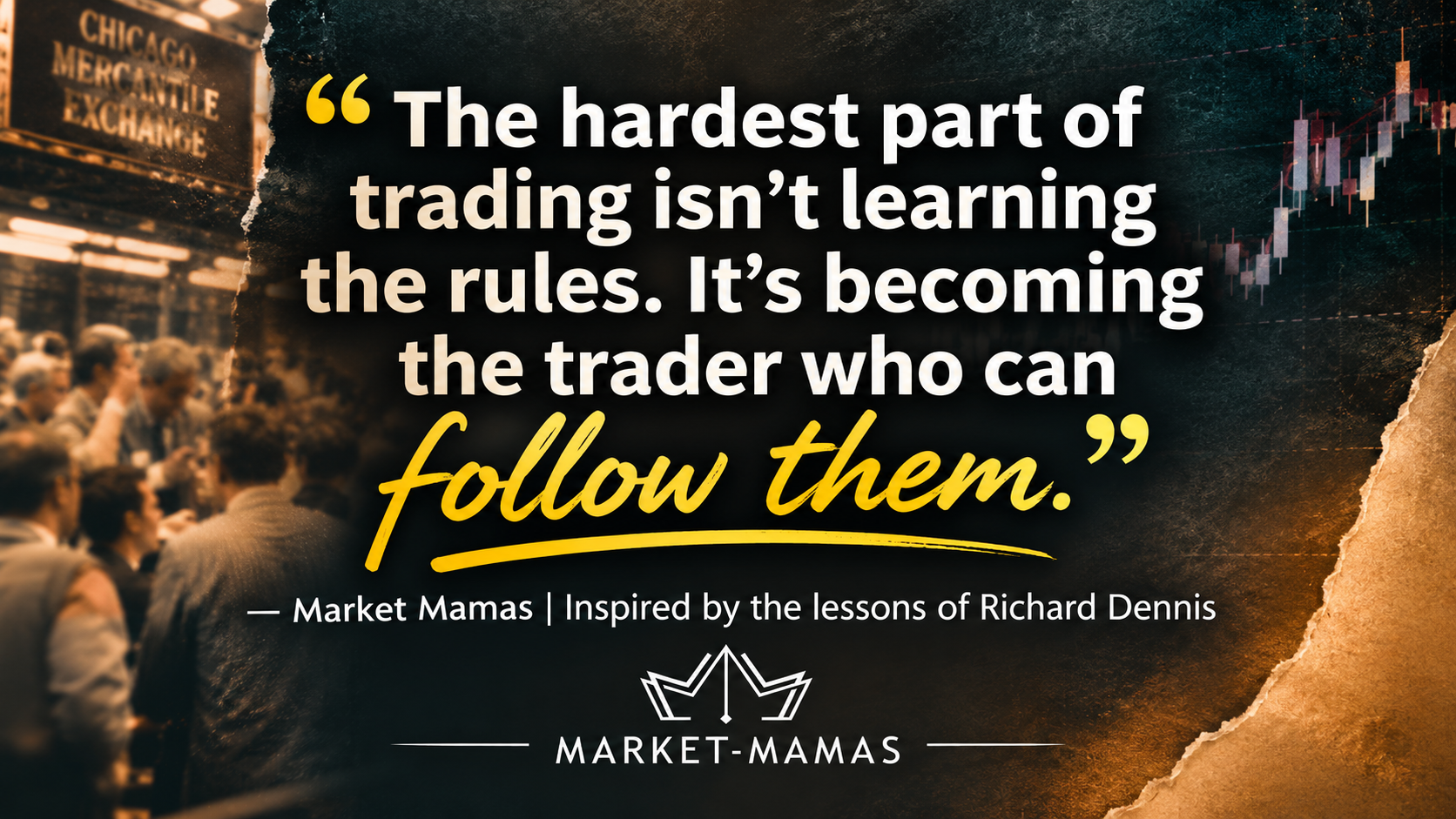
Because learning the rules is one thing. Becoming the trader who can consistently follow them? That's where the real work begins.
🎙️ Watch or listen to the full episode of Learning from Legends: Richard Dennis on Market Mamas.
Protect your capital. Protect your mindset. And keep building the evidence.
Educational content only. Futures trading involves substantial risk. Past performance does not guarantee future results.
And that’s a wrap for my deep dive into the life of Legendary Trader Richard Dennis. I love trading and am completely dedicated to continual pursuit in this business. And I’m pretty into the opportunity hosting this podcast provides me as well. I believe we can help each other out and all pursue greatness together. There is tremendous power in a supportive community and I am so grateful to anyone who has read to the end of this episode blog and is still here and hence is allowing me the privilege of contributing to your trading support system. Please send me a comment (https://www.market-mamas.com/contact) if you are into this podcast series idea and have legendary traders that you would like to hear me cover in future episodes. Happy trading and take care of yourself along the way 💛